RESTRICTION OF LEAD (PB) IN NATIONAL PAINT PRODUCTS: INDUSTRY PERSPECTIVE AND APCI’S STRATEGIC RECOMMENDATIONS
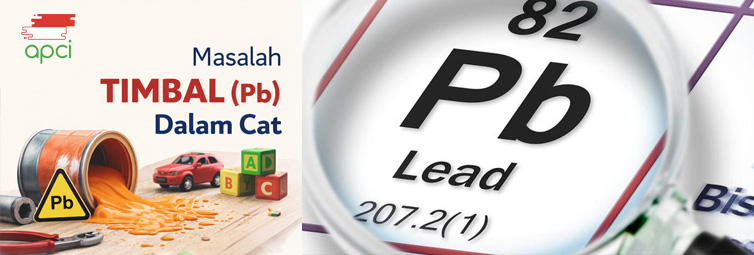
Jakarta, 26 February 2026 Secretariat of the Indonesian Paint Manufacturers Association (IPMA)
INTRODUCTION: GLOBAL ISSUE AND SDGs
The issue of lead in paint has been a trending topic since 2012, when BALI FOCUS (a local NGO), mandated by United Nations Environment Programme (UNEP) and World Health Organization (WHO), began overseeing the elimination of lead in paint in Indonesia.
This initiative forms part of the United Nations Sustainable Development Goals (SDGs), a global movement aimed at ending poverty, protecting the planet, and ensuring peace and prosperity. Initially, it was globally agreed that paints should be lead-free by 2020.
Each year, BALI FOCUS—renamed NEXUS 3 Foundation in 2015—held campaigns and seminars highlighting findings that lead-containing paints were still present in the domestic market. These seminars were supported by WHO, UNEP, the Ministry of Environment and Forestry, the Ministry of Industry, the Indonesian Pediatric Society (IDAI), and other relevant institutions.
In early 2024, the Lead Exposure Elimination Programme (LEEP), an NGO from the United Kingdom, together with the World Bank, continued the oversight of eliminating lead paint in Indonesia, replacing NEXUS 3.
WHAT IS THE ISSUE WITH LEAD (Pb)?
Lead (Pb) is a toxic heavy metal that can cause poisoning when accumulated in human blood beyond certain levels. The most concerning dangers are its toxic effects, including:
- Growth and Development Disorders: Inhibits physical, mental, cognitive, and behavioral development in children.
- Adult Health Disorders: Causes neurological, kidney, and reproductive disorders, and is suspected to have carcinogenic effects.
The primary objective of banning lead in paint is to protect children as the nation’s future generation.
Lead in Daily Life:
• Batteries, Paint, Radiation Shielding (X-ray, nuclear), Weights, Sound Insulation, Pipes, Solder, Cosmetics, etc.
Pathways into the Human Body:
• Inhalation, ingestion via food and water, and skin contact.
Environmental Impact: Improper disposal of used lead-acid batteries can contaminate soil, groundwater, and air.
Lead-based paint is the second-largest source of lead exposure according to research. As paint deteriorates over time, it can release lead particles into the air. Bright colors such as orange, green, and bright red are often associated with lead pigments.
LEAD IN PAINT PRODUCTION
The main raw materials of paint include resin (binder), pigment (colorant), extender, additives, and solvent. Lead is used primarily in pigments (lead chromate) and driers (lead octoate).
Lead chromate is a bright yellow inorganic compound with very low water solubility. It is typically found in solvent-based decorative paints or alkyd paints.
Reasons for Using Lead Chromate:
- Bright and strong color
- Excellent weather and scratch resistance
- Easy dispersion
- Economical price
WHO sets the maximum allowable lead content in paint at 90 ppm. Alternatives such as bismuth vanadate, azo organic pigments, and benzimidazolone are available but more expensive. Lead-based driers can be replaced with cobalt, calcium, zinc, or strontium octoates.
EFFORTS TOWARD LEAD-FREE PAINT
Nexus3 actively provided free advocacy and reformulation assistance. In 2020, the “Technical Guidelines for Reformulating Lead Paint” were prepared and reviewed by IPMA.
Lead-containing paints are still found in the market across various industry scales. The Ministry of Industry, through the Directorate of Downstream Chemical and Pharmaceutical Industries (IKHF), is considering multiple aspects before issuing specific regulations.
IPMA OFFICIAL POSITION
- Appeal to Producers: IPMA urges manufacturers to cease producing lead-containing paint. Surveys by LEEP and the National Standardization Agency (BSN) show significant reductions. PT Mowilex Indonesia announced withdrawal of lead-based products in August 2023.
- Industry Readiness: The national paint industry is ready to transition to lead-free raw materials.
- Regulatory Sovereignty: In 2024, LEEP and the World Bank urged immediate prohibition. The Ministry of Industry emphasized national sovereignty in regulatory decisions.
- 2025 Survey Results: Emulsion wall paints are generally lead-free; however, one solvent-based yellow paint product exceeded 90 ppm.
- Technology Policy: Decisions regarding external technical assistance are left to each company.
IPMA STRATEGIC RECOMMENDATIONS
- Import Control: Restrict lead chromate imports through licensing and quota mechanisms.
- Phased Prohibition: Gradual implementation including warning period and stock depletion.
- Threshold Regulation: Official prohibition of lead content exceeding 90 ppm.
- Labeling: Mandatory “Lead-Free” labeling on decorative paints.
- Voluntary SNI: Maintain voluntary SNI certification to avoid excessive financial burden.
- Transition Period: Allow time for existing market stocks to be depleted.
- Cost Consideration: Recall mechanisms should not excessively burden industry finances.
- RIA Preparation: Discussed in a meeting with IKHF Directorate and PT Sucofindo on 15 December 2025 at Novotel Bogor Golf Resort and Convention Center regarding the preparation of a Regulatory Impact Analysis (RIA), though no final agreement was reached.
CONCLUSION
IPMA invites all stakeholders to monitor forthcoming policies from the IKHF Directorate. Let us uphold the principle of independence and remain masters in our own country.
DOMESTIC PAINT MANUFACTURERS: UNITED, ADVANCING TOGETHER, BUILDING THE NATION.
ADDITIONAL INFORMATION: LEAD-FREE INDONESIA
On 10 November 2025, the Coordinating Ministry for Human Development and Culture together with UNICEF held the “Kick-off Meeting and Establishment of the Technical Working Group (TWG) for the National Action Plan (RAN) on Lead-Free Indonesia.”